Does China need more than criminal law?
The more things change in China, the more obvious is the need for civil law.China finally starts to write a proper civil code

THE National People’s Congress (NPC)… wrapped up its annual session… Usually its business is unremarkable. This year, however, a piece of legislation that was passed on the final day may prove unusually important. It is known by the unlovely name of the General Principles of Civil Law. It sets the stage for China to pass its first civil code, an overarching law governing legal disputes other than those involving crimes…
[U]nder Communist rule, China has muddled through without a unified civil code. It has bits of one. It passed an inheritance law in 1985, a contract law in 1999 and a property law in 2007. But there are big gaps and inconsistencies…
China’s current leaders… hope [a civil code] will provide a stable legal framework for a rapidly evolving society racked by increasingly complex disputes. In 2014 they decided to try again, aiming to write one by 2020. This week’s approval of the code’s general principles is the first fruit. It covers everything from individual rights and the statute of limitations to whether fetuses can own property (they can).
Some of the new principles have been set out before. Privacy rights, for example, are in the tort bill of 2009. But their inclusion in the revised preamble gives them more authority.
Not all the changes are for the better. In a section on protecting personal reputations, the new preamble makes it an offence to defame “heroes and martyrs”. That is likely to have a chilling effect on historical inquiry…
A civil code—embracing laws of property, contract, inheritance, family and marriage—will not guarantee fairness. The Communist Party will continue to ignore the law when it wants to. But for all the legal system’s flaws, many people still use it. The code may make it less opaque and outdated, and judges’ lives easier.
Teaching Comparative blog entries are indexed. Use the search box to look for country names or concept labels attached to each entry.
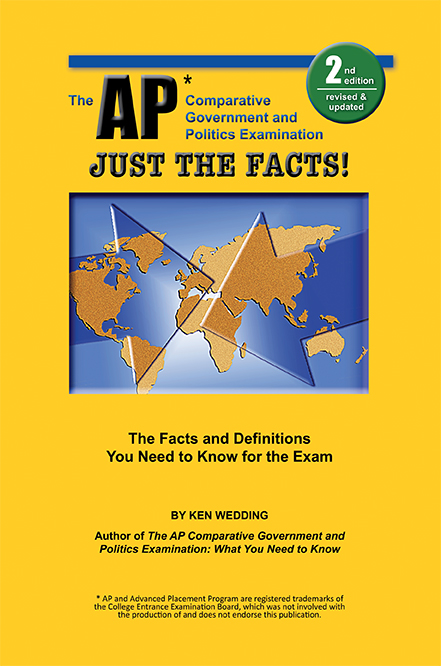 Just The Facts! 2nd edition is a concise guide to concepts, terminology, and examples that will appear on May's exam.
Just The Facts! is available. Order HERE.
Amazon's customers gave this book a 5-star rating.
Labels: China, civil law, politics
posted by Ken Wedding @ 5:30 AM
0 comments


