The power of the bureaucrat
We all know that the executive cannot sit down with a simple program and create a budget for the coming year. The executive has to rely on bureaucrats in the "budget" office and all the other ministries to provide expertise and accurate estimates of income and costs.
What happens if the bureaucrats have agendas of their own? In the British model, the bureaucrats are supposed to pretty much be the tools of the elected government. Of course, even in the United Kingdom, top bureaucrats influence budgets and policy. In Nigeria, bureaucrats have long held even greater influence.
President Buhari suspects that influence has led to overspending and corruption. He may now have some evidence.
Top Civil Servants May Be Fired For Sabotaging President Buhari’s Budget
SaharaReporters has learned that the Muhammadu Buhari administration was considering firing several top civil servants who acted in various ways to sabotage or undermine the government’s efforts to produce budget proposals that reflected financial prudence and frugality. Two top administration sources told our correspondent that “bureaucratic resistance and entrenched systemic corrupt practices dogged every move by the Presidency during the preparation of the 2016 budget”…
One source stated that, after learning that the Presidency was considering a large budget of possibly N8 trillion in order to significantly increase capital expenditure, some bureaucrats jacked up the budget proposal to N9.7 trillion for overhead and capital spending…
According to our source, President Buhari found the bureaucrats’ games infuriating, but decided to maintain his cool in order to meet the deadline for presentation of the budget in line with the laws and regulations governing the budget process. “While Mr. President has always stood for prudence and against waste, the bureaucrats were sneaking in controversial provisions that clearly didn’t represent the president’s standards and priorities,” said our source…
Our sources disclosed that many of the controversial provisions in the budget were essentially smuggled in by what one of them described as “the budget mafia in the civil service, made up of people who consider the period of budgeting as their time of massive opportunity to arrange the stealing of public funds.”…
The source added, “Some people were so bent on exploiting the system that the time was simply not sufficient to stop them. But since the budget is only an estimate, the implementation part now offers the Presidency the opportunity to tame the corrupt intentions and practices.”…
Teaching Comparative blog entries are indexed. Use the search box to look for country names or concept labels attached to each entry.
What You Need to Know 7th edition is ready to help.
Order the book
HERE
Amazon's customers gave this book a 4-star rating.
 Just The Facts! 2nd edition is a concise guide to concepts, terminology, and examples that will appear on May's exam.
Just The Facts! is available. Order HERE.
Amazon's customers gave this book a 5-star rating.
Just The Facts! 2nd edition is a concise guide to concepts, terminology, and examples that will appear on May's exam.
Just The Facts! is available. Order HERE.
Amazon's customers gave this book a 5-star rating.
The Comparative Government and Politics Review Checklist.
Two pages summarizing the course requirements to help you review and study for the final and for the big exam in May. . It contains a description of comparative methods, a list of commonly used theories
, a list of vital concepts, thumbnail descriptions of the AP6,
and
a description of the AP exam format
. $2.00.
Order HERE.
What You Need to Know: Teaching Tools, the original version and v2.0 are available to help curriculum planning.
Labels: bureaucracy, Nigeria, power, public spending
It's not just distributions of income and wealth
In many (most) countries the distribution of incomes has become more and more unequal. (The distribution of wealth has always been very unequal.)(Think about it.)
Social welfare spending is, theoretically, a balancing feature of liberal economies. Is it?
Sharper elbows: The well-off are grabbing an ever-larger share of spending
PUSHY middle-class types are said to have a knack for getting the most out of the state. With their sharp elbows, the argument goes, the wealthy jostle others out of the way in the queue for doctors’ appointments, school places and other scarce public services. The conventional wisdom is half-right. In absolute terms, Britain’s poor consume more public services than the rich—but, after adjusting for need, studies suggest that the rich tend to get more than their due.
That long-standing inequality may be growing…
[T]he [British] Office for National Statistics (ONS)… estimated the monetary value of certain public services, including education, the National Health Service (NHS) and transport, which combined offer the average household benefits worth £7,000 ($10,600) a year, more than the value of cash benefits such as pensions and jobseekers’ [unemployment] allowance…
Much the biggest of the various services analysed is the NHS, which eats up one-fifth of all government spending. One reason for its apparently growing generosity to the well-off is that the elderly, its main clients, are getting richer…
Yet data for NHS spending on the working population show a similar trend: whereas in 2000 households in the bottom income quintile received 27% more than those in the richest, today they receive the same as each other. One explanation is that the rich are ditching their private health insurance and instead using the NHS…
Just as fewer people are taking out private health insurance, fewer are sending their children to private school. Since 2008 the proportion of children at independent schools in England has slipped… Yet the long-term trend in education funding is steeply progressive…
In 2012 the government raised the cap on tuition fees from £3,375 to £9,000 per year, thus reducing a subsidy whose main beneficiary had been the middle class. Poor students have been protected by a generous maintenance grant and relaxed terms for the repayment of loans. Their participation rate has grown at a faster rate than that of their richer peers since the reform…
The most regressive public service is transport, from which the richest quintile benefit almost twice as much as the poorest. The reason is that they travel more—and by the most expensive means. The state subsidises rail travel by £5 billion a year. Yet intercity trains bulge with well-dressed folk tapping away on laptops; each year the average top-quintile earner travels 2,300km (1,400 miles) by train, five times as much as the bottom earners…
The wealthy also drive three times as many miles as the poor. This makes them big beneficiaries of spending on roads, worth £8 billion a year… Poor people make up ground elsewhere: they use buses twice as much. But bus subsidies are smaller, and the rich use them increasingly frequently…
Teaching Comparative blog entries are indexed. Use the search box to look for country names or concept labels attached to each entry.
The Comparative Government and Politics Review Checklist.
Two pages summarizing the course requirements to help you review and study for the final and for the big exam in May. It contains a description of comparative methods, a list of commonly used theories
, a list of vital concepts, thumbnail descriptions of the AP6,
and
a description of the AP exam format
.
Just The Facts! 2nd edition is a concise guide to concepts, terminology, and examples that will appear on May's exam.
Just The Facts! is available. Order HERE.
Amazon's customers gave this book a 5-star rating.
What You Need to Know 7th edition is ready to help.
Order the book
HERE
Amazon's customers gave this book a 4-star rating.
What You Need to Know: Teaching Tools, the original version and v2.0 are available to help curriculum planning.
Labels: cleavages, economics, public spending, UK
Another case study
The low petroleum prices should remind us that it's not only Mexico that depends upon oil exports. Russia, Iran, and Nigeria also depend upon those exports. How do these low prices affect government and politics in those countries? And how do those prices affect government and politics in China? Is the UK immune to the forces of lower oil prices?
Mexico, which depends largely on oil revenue, cuts public spending
The collapse in global oil prices forced Mexico on Friday to announce large cuts in public spending, threatening several major projects, including the government’s showcase but controversial bullet train out of Mexico City.
Finance Minister Luis Videgaray announced cuts of about $8.5 billion, about 0.7% of Mexico’s gross domestic product. About a third of the Mexican government’s budget comes from oil revenue, and the price-per-barrel of Mexican crude has fallen in recent months from about $100 to $38…
Other sectors taking hits were the mammoth state oil and gas company, Petroleos Mexicanos, to the tune of $4.1 billion, and the unwieldy education ministry. Videgaray said subsidies on housing and seasonal agricultural work would not be affected, although pensions for the elderly would be reduced…
Teaching Comparative blog entries are indexed. Use the search box to look for country names or concept labels attached to each entry.
What You Need to Know SIXTH edition is an up to date guide to the course material.
Labels: capacity, Mexico, public spending
Following on the barefoot doctors
Public health has been a priority in China since the revolution. Some efforts have been more productive than others, but progress is undeniable.
Congratulations! Inoculations!
FANS of the China model frequently say that, for all the disadvantages of a one-party state, there are also benefits. Enforcing basic health care is one—and by no means a small one. Last year China’s mortality rate for children under five years old was just one-fifth the rate it was in 1991, down from 61 deaths per 1,000 live births to 12. The maternal mortality rate has also dropped substantially—by 71%—since 1991. In 1992, one in ten Chinese children under five contracted hepatitis B. Today fewer than one in 100 of them carry the disease.
 |
| A cost of public health |
China’s advances have not gone unnoticed. Last month a group of four international bodies, including the World Health Organisation (WHO) and the World Bank, said China was one of ten countries to have made exceptional progress in reducing infant and maternal mortality…
China’s improvement lies in two basic, connected areas: better care at birth and countrywide immunisation. Since 2000 the government has offered subsidies to mothers who give birth in hospitals…
Margaret Chan, the WHO’s director-general, this month said that China’s regulatory system for vaccines had passed the WHO’s evaluation with outstanding results…. China and the WHO claim that about 95% of children are vaccinated for measles, rubella and polio. In 2008 the government added eight new vaccines, including hepatitis A and meningitis, to its national programme. All are administered to children free of charge. Just as important has been the mobilisation of a network of health-care workers, at provincial, county and township levels…
That does not guarantee effectiveness…
Part of the problem is the growing number of rural migrant children. They are tied to their hometown through the household-registration, or hukou, system and do not qualify for free health services, such as routine immunisation, outside it. Another hurdle is the complexity of administering so many vaccines in such a large, developing country…
That China is now at a stage where it needs a more sophisticated and targeted immunisation programme is testimony to its success, however. It is a sign that 1.4 billion people have taken another step up the ladder of good health.
Teaching Comparative blog
entries are indexed.
What You Need to Know SIXTH edition is AVAILABLE NOW.
Updated and ready to help.
Just The Facts! is a concise guide to concepts, terminology, and examples that will appear on May's exam.
What You Need to Know: Teaching Tools, the original version and v2.0 are available to help curriculum planning.
Labels: China, policy, political culture, public spending
Death of the welfare state?
The austerity advocates claim that public spending is the cause of all things awful in European economies. Evidence?
http://www.theatlantic.com/business/archive/2012/07/the-myth-that-entitlements-destroy-a-nations-growth-busted-in-1-chart/259645/
The euro crisis is supposed to be the death knell of cradle-to-the-grave government. But the reality is the only thing the euro crisis might be the death knell of is the euro. None of Europe's biggest welfare states are in trouble.
Let's look at some data. The chart below compares average social spending with adjusted per capita GDP growth since 2000 on the vertical axis. (Note: The y-axis shows social spending as a percentage of GDP; the x-axis shows percentage growth. Data is from the OECD and IMF). See if you can make out any kind of discernible relationship here.
 |
| (click on chart for larger view) |
I know this picture is worth 1,000 words, but here are four more. There is no pattern…
You don't need to sacrifice economic security for economic growth. Other countries manage both just fine. Actually, the U.S. is in better shape than most other rich countries because our demographic crunch is much less ... crunchy? Our society is still growing, if aging…
Thanks to Eric Black writing in
Eric Black Ink at
MinnPost for posting
The Swedish problem of conservative orthodoxy
.
Teaching Comparative blog
entries are indexed.
The First Edition of What You Need to Know: Teaching Tools is now available from the publisher
The Fourth Edition of What You Need to Know is available from the publisher (where shipping is always FREE).
Labels: concepts, economics, growth, public spending


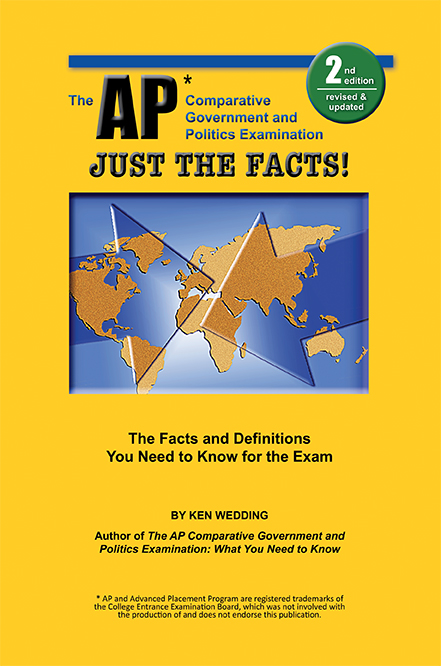 Just The Facts! 2nd edition is a concise guide to concepts, terminology, and examples that will appear on May's exam.


